
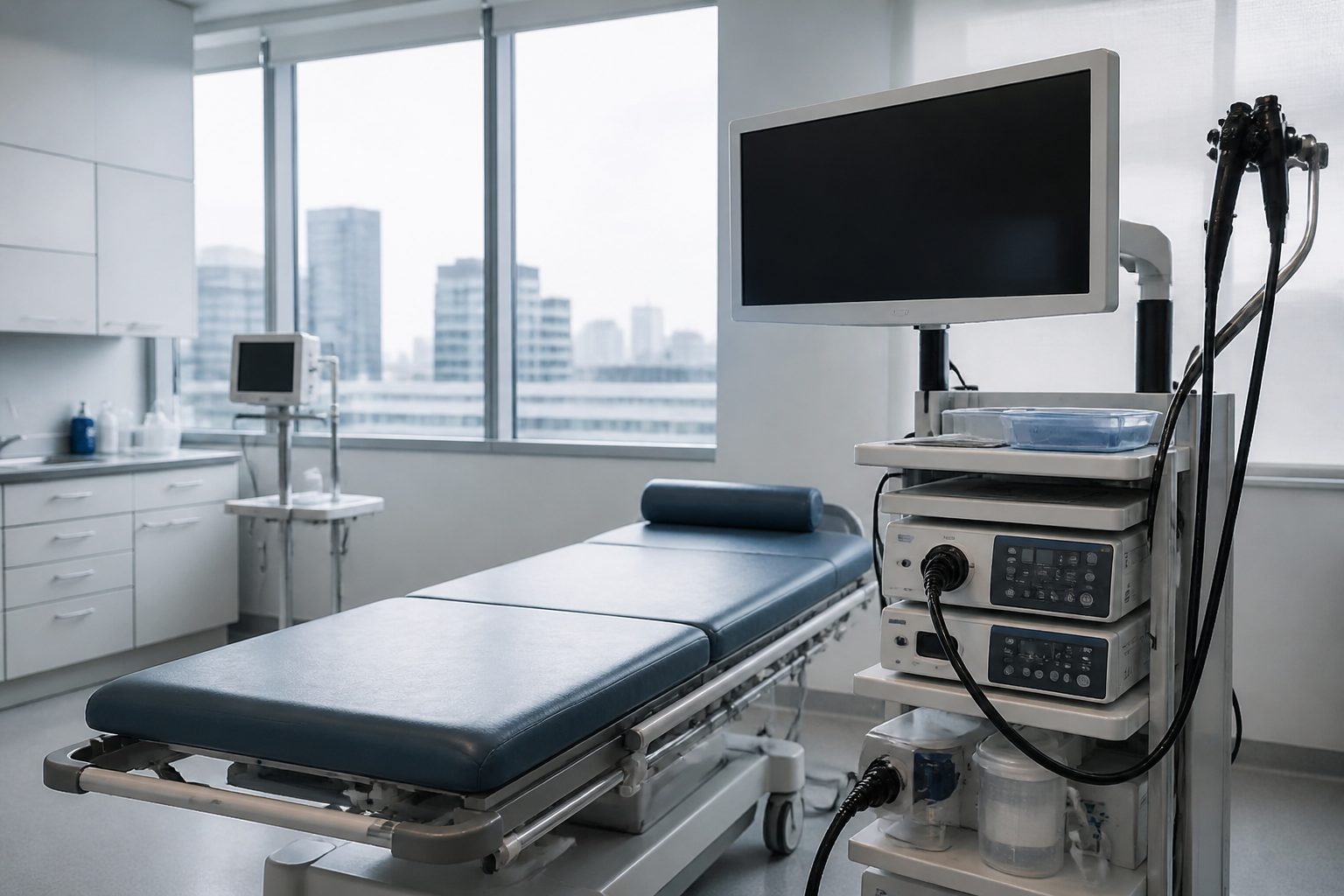
Patients and families seeking treatment for digestive, kidney, liver, or urology conditions often face confusing choices about where to go and how much it will cost. Hospital packages for procedures like endoscopy, colonoscopy, gallstone removal, kidney stone treatment, prostate (BPH) care, hernia repair, and liver disease management are common, but what’s included and the price can vary widely.
This guide explains how to compare hospital packages for digestive and related specialty care, with cost examples from major medical travel destinations. It covers what to look for in a package, how pricing works, and practical steps for choosing the right hospital for your needs.
What is a hospital package for digestive care?
A hospital package for digestive care is a pre-arranged bundle of services offered at a fixed price, designed to bring clarity and cost control to patients undergoing common procedures in gastroenterology, hepatology, nephrology, and urology. These packages are especially popular in countries with active medical tourism sectors, such as India, Thailand, Turkey, and the Philippines, where patients seek predictable pricing and streamlined care.
The typical package covers the main procedure—such as an endoscopy, gallbladder removal, or kidney stone treatment—along with a set of related services. These usually include:
- Initial consultation with the specialist and standard pre-operative investigations (basic blood work, ECG, etc.)
- Operating theatre and anesthesia charges for the procedure
- Standard medications and consumables used during the operation
- Room charges for a fixed number of days (often 1–3, depending on the procedure)
- Routine nursing care and daily doctor visits during the hospital stay
- Post-procedure observation, discharge summary, and basic instructions for recovery
Packages are generally designed for straightforward, elective cases without major complications. If your condition is complex, involves multiple organs, or if emergencies arise (such as the need for a blood transfusion, ICU care, or unexpected biopsies), these may not be fully covered by the package and can lead to significant extra charges. In some countries, packages may also include airport transfers, translation services, or basic follow-up consultations for international patients. Always read the fine print, ask for a detailed breakdown, and clarify what is excluded before making your decision. This ensures you avoid surprises and receive the care you expect within your planned budget.
Typical digestive and urology procedures covered by packages
Hospital packages in gastroenterology, hepatology, nephrology, and urology commonly cover a range of diagnostic and therapeutic procedures, making them attractive for both local and international patients seeking predictable costs. In countries like India, Thailand, and Turkey, these packages are widely marketed and can include:
- Upper GI endoscopy and colonoscopy: These procedures are often offered as both diagnostic and basic therapeutic packages. For example, a standard colonoscopy package may include polyp detection but not removal, which could be an extra charge.
- Gallbladder (gallstone) removal – laparoscopic cholecystectomy: This is one of the most commonly bundled surgeries, especially in India and Southeast Asia. Packages typically include pre-op tests, surgery, anesthesia, and a fixed hospital stay (usually 2–3 days).
- Kidney stone removal – ureteroscopy, lithotripsy: These minimally invasive procedures are popular package options in countries like Turkey and the Philippines. The package may or may not include stone analysis or follow-up imaging.
- Prostate enlargement (BPH) surgery – TURP, laser: Packages for benign prostatic hyperplasia treatment often cover surgery, anesthesia, and a short hospital stay, but may exclude special medications or catheters.
- Hernia repair – open or laparoscopic: Both open and minimally invasive hernia repairs are widely available as packages, with varying inclusions for mesh type, length of stay, and follow-up visits.
- Liver disease management (non-transplant, non-cancer): Packages in this area are usually focused on diagnostics and short-term management, such as liver function tests, ultrasound, and specialist consultations. Advanced interventions (like transplant or cancer treatment) are generally not included.
Some hospitals also offer bundled screening packages for digestive health, which may combine blood tests, stool tests, and basic endoscopy. These are especially common in private hospitals targeting health tourism. For chronic conditions like liver or kidney disease, packages typically focus on initial diagnostics and stabilization, not on prolonged hospital stays or complex interventions. Always confirm exactly what is included and ask about potential add-ons, especially if your health situation is complex or if you have multiple conditions.
Cost comparison: Digestive and urology packages in major countries
Package prices vary significantly between countries and even within cities. Below is a comparative table with typical price ranges for common digestive and urology procedures at reputable private hospitals. Prices are for standard cases, in USD, with local currency equivalents where useful. They generally include 1-2 days’ stay, routine tests, and standard consumables, but not extended stays or rare complications.
| Country | Upper GI Endoscopy | Colonoscopy | Gallstone Removal | Kidney Stone Removal | Prostate (BPH) Surgery | Hernia Repair |
|---|---|---|---|---|---|---|
| India | $120-$350 (₹10k-29k) | $180-$450 (₹15k-37k) | $1,200-$2,400 (₹1-2 lakh) | $800-$2,000 (₹66k-1.7 lakh) | $1,400-$2,700 (₹1.2-2.2 lakh) | $1,000-$2,000 (₹82k-1.7 lakh) |
| Thailand | $300-$500 (฿10k-17k) | $500-$800 (฿17k-27k) | $3,000-$6,000 (฿105k-210k) | $2,500-$4,500 (฿87k-157k) | $3,800-$6,500 (฿132k-226k) | $2,500-$4,000 (฿87k-140k) |
| Turkey | $250-$400 | $350-$700 | $2,500-$4,500 | $1,800-$3,500 | $2,500-$5,000 | $2,000-$3,800 |
| UAE | $400-$700 (AED 1,470-2,570) | $600-$1,100 (AED 2,200-4,000) | $4,000-$7,000 (AED 14,700-25,700) | $3,500-$6,000 (AED 12,900-22,000) | $5,000-$9,000 (AED 18,400-33,100) | $3,500-$6,000 (AED 12,900-22,000) |
| Singapore | $650-$1,000 (S$880-1,350) | $900-$1,400 (S$1,220-1,900) | $5,500-$8,500 (S$7,500-11,500) | $4,500-$7,500 (S$6,100-10,200) | $7,000-$12,000 (S$9,500-16,300) | $5,000-$8,000 (S$6,800-10,800) |
| Philippines | $180-$350 (₱10k-20k) | $220-$480 (₱12k-27k) | $1,500-$2,800 (₱84k-157k) | $1,200-$2,400 (₱67k-134k) | $1,600-$3,000 (₱89k-167k) | $1,100-$2,200 (₱61k-122k) |
| USA | $1,200-$2,500 | $1,500-$3,500 | $8,000-$18,000 | $7,000-$15,000 | $9,000-$20,000 | $7,000-$15,000 |
| UK | $950-$1,700 (£750-1,350) | $1,200-$2,500 (£950-2,000) | $7,000-$13,000 (£5,500-10,200) | $6,000-$12,000 (£4,700-9,400) | $8,000-$16,000 (£6,300-12,600) | $6,500-$12,000 (£5,100-9,400) |
What is usually included in a hospital package?
Most hospital packages for digestive and urology procedures include:
- Initial consultation and pre-anaesthesia assessment
- Basic blood and urine tests, ECG, chest X-ray
- Procedure/operation fees (including surgeon, anaesthetist, and OT charges)
- Standard consumables and medicines used during the procedure
- Room charges for a standard number of days (often 1-2)
- Routine post-op monitoring and discharge summary
Packages do not typically include:
- Extra days in the hospital (beyond the package)
- Specialised investigations (CT, MRI, advanced blood tests)
- Medications for take-home use
- Treatment of complications or unrelated conditions
- Personal expenses (meals for relatives, phone, etc.)
Always request a written breakdown. Ask what happens if your stay is longer, if extra tests are needed, or if something unexpected is found during the procedure.
What drives the cost of digestive and urology packages?
Several factors affect the price of hospital packages for digestive, kidney, liver, and urology care:
- Hospital tier and location: Major city hospitals and internationally accredited (JCI, NABH) centres charge more than regional or non-accredited hospitals.
- Room category: Packages are usually for shared or standard single rooms. Private or deluxe rooms cost extra.
- Type and complexity of procedure: Laparoscopic (keyhole) surgeries cost more than open procedures. Complex cases (large stones, multiple hernias) may not be covered under standard packages.
- Inclusions/exclusions: Some packages are all-inclusive, others leave out essential items (e.g., anaesthesia, consumables, or certain tests), leading to unexpected bills.
- Doctor’s fees: Senior consultants may charge more, especially in private hospitals.
- Insurance or cash payment: Self-paying international patients may get a bundled rate, but always confirm in writing.
Compare not just the headline price, but the total likely cost for your full stay and any extra care you might need.
How to compare hospital packages for digestive care
When comparing packages, focus on more than just the price. Here’s what to check:
- Inclusions: Get a detailed list of what is and isn’t included. Look for any exclusions (e.g., extra tests, emergency care).
- Accreditation and experience: Prefer hospitals with a track record in your procedure and international accreditation if possible.
- Doctor’s credentials: Ask who will perform the procedure and their experience with international patients.
- Facilities: Check if the hospital has modern endoscopy suites, advanced imaging, and a 24/7 ICU, in case of complications.
- Patient services: Look for language support, airport pickup, help with visas, and international patient coordinators.
- Written estimate: Insist on a written quote with the full breakdown, validity period, and payment terms.
Don’t be shy about asking for clarification or comparing multiple hospitals before deciding.
Hidden costs and what to watch for
Even when you choose a hospital package, there are several potential hidden costs that can catch patients off guard. Packages are usually designed for straightforward, uncomplicated cases, and anything outside the standard pathway can result in additional charges. For example, if your doctor discovers something unexpected during a procedure—such as a polyp during a colonoscopy—removing or treating it may not be included in the base price. Similarly, if your recovery takes longer than anticipated, you could be billed for extra nights in the hospital, which can add up quickly, especially in high-cost countries or private hospitals.
- Extra investigations: Advanced imaging (CT, MRI), specialized blood tests, or additional diagnostic procedures are often considered add-ons. In countries like Thailand or Malaysia, these can be priced separately and may be significantly more expensive for international patients.
- Special consumables: If your procedure requires stents, special meshes, or high-end implants, these might not be part of the standard package and can lead to substantial extra costs.
- Incidental findings: Treatment of additional conditions found during your main procedure—such as removing a polyp, treating a minor bleed, or addressing unrelated issues—are often billed separately.
- Follow-up care: Post-discharge medications, wound care, and follow-up consultations (especially if they occur after you return home) are usually not included. In some countries, telemedicine follow-ups may be offered at a reduced rate, but this is not universal.
- Extended stay or complications: If complications arise, such as infection or the need for intensive care, costs can escalate rapidly. Some hospitals offer insurance or capped pricing for complications, but many do not, especially in lower-cost destinations.
Before committing, always ask the hospital for their policy on extensions, complications, and cancellations. Request a written breakdown of what is and isn’t included. If you are traveling for care, clarify whether your travel insurance covers medical complications or unexpected extensions. Inquire about the hospital’s approach to package upgrades or refunds if your condition changes. Taking these steps will help you avoid unpleasant financial surprises and ensure you have a realistic understanding of your total out-of-pocket costs.
How to save safely on digestive and urology hospital packages
Saving money on hospital packages for digestive and urology care is possible, but it requires careful planning to avoid compromising on safety or quality. Start by researching hospitals in cities known for high-quality care but lower overall costs. For example, in India, Chennai and Hyderabad often offer lower prices than Mumbai or Delhi, while still maintaining excellent standards. Similarly, in Turkey, cities like Izmir or Antalya may be more affordable than Istanbul, and in the Philippines, Cebu can be less expensive than Manila.
- Ask about promotions: Some hospitals offer off-peak discounts or special rates for international patients, especially during low tourist seasons. These deals can provide substantial savings without affecting the quality of care.
- Consider day-care options: For straightforward procedures like diagnostic endoscopy or colonoscopy, ask if a day-care (same-day) package is appropriate. This eliminates the cost of overnight stays, which can be a major expense in private hospitals.
- Share your medical history: Providing a complete medical history and current medication list in advance helps doctors avoid unnecessary repeat tests and tailor your care, reducing the risk of unexpected costs.
- Bring recent test results: Carry your latest lab reports, imaging, or specialist consultations from your home country. Many hospitals will accept these if they are recent and in English, saving you the cost and time of repeat investigations.
However, never compromise on hospital accreditation, infection prevention protocols, or the experience of your medical team just to save money. Check for recognized accreditations like JCI or NABH, and review the hospital’s track record in your procedure. An unexpected complication—such as infection, bleeding, or need for intensive care—can quickly wipe out any savings and may even put your health at risk. Balancing cost with safety and quality is the best way to achieve value in your digestive or urology care.
Planning your trip: Practical tips for international patients
When booking a digestive or urology procedure abroad, plan for:
- Visa requirements and processing time
- Travel and accommodation for yourself and a companion
- Pre-travel medical clearance (some hospitals require it)
- Time for recovery before flying home—most patients need at least 2-7 days post-procedure before it is safe to travel
- Emergency contact numbers and local support
- Access to your medical records (bring copies, or ensure the hospital will provide them before you leave)
Ask about hospital pickup from the airport, translation services, and any extra fees for international transfers. If you have chronic conditions (such as diabetes or heart disease), ensure these are stable and inform your care team in advance.
The bottom line
Hospital packages for digestive, kidney, liver, and urology procedures can offer significant benefits in terms of cost transparency and predictability, but only if you are diligent about understanding the details. These packages, which are increasingly popular in countries like India, Thailand, Turkey, and the Philippines, typically bundle the main procedure, essential hospital services, and basic aftercare for a fixed fee. However, what is included varies widely by hospital and country. For example, in India, packages may include three days of stay and standard medications, while in Turkey, airport transfers and translation services might be bundled for international patients.
To make the most of hospital packages, compare offerings from several hospitals. Look for internationally recognized accreditations such as JCI (Joint Commission International) or NABH (National Accreditation Board for Hospitals & Healthcare Providers) to ensure quality and safety. Always request a detailed, written estimate that specifies what is included and what will incur extra charges. This should be provided before you commit or travel, and in your preferred language if you are seeking care abroad.
Don’t forget to budget for all possible extras: travel (flights, trains, taxis), accommodation for yourself and any companions, meals, and the potential need for an extended stay if recovery is slower than expected. Also factor in lost work days and the cost of post-discharge care or follow-up appointments, which may not be covered in the initial package. By thoroughly researching, comparing, and clarifying all aspects of your hospital package, you can make a safe, informed decision that balances quality care with financial peace of mind.
Frequently asked questions
What if my case is more complicated than expected?
If the surgeon finds a more complex problem or you need extra treatment, the hospital will usually charge extra, outside the package. Always ask in advance how such situations are handled and get this in writing.
Can I get a package price for more than one procedure?
Some hospitals offer combined packages for patients needing multiple procedures (e.g., endoscopy plus hernia repair). Ask for a custom quote and check what is included for each procedure. Combined packages may save money but can also increase risk.
How soon can I travel after a digestive or urology procedure?
Most patients can travel home within 2-7 days after simple procedures. For major surgery, your doctor will advise based on your recovery and any complications. Flying too soon after surgery increases the risk of blood clots and other issues.
Is insurance accepted for international patients?
Some hospitals accept international insurance, but many require self-payment upfront. Always check with both your insurer and the hospital before booking. Get pre-authorisation if needed and bring all documents with you.
What documents should I bring for treatment abroad?
Bring your passport, visa, medical records (test reports, prescriptions), and any referral letters. Also carry emergency contacts and insurance details if you have coverage. Having complete documentation can speed up your admission and care.
Related guides
Disclaimer: Prices and inclusions are indicative and vary by hospital, city, and individual case. Always request a written quote and consult a qualified medical professional before making treatment decisions.