
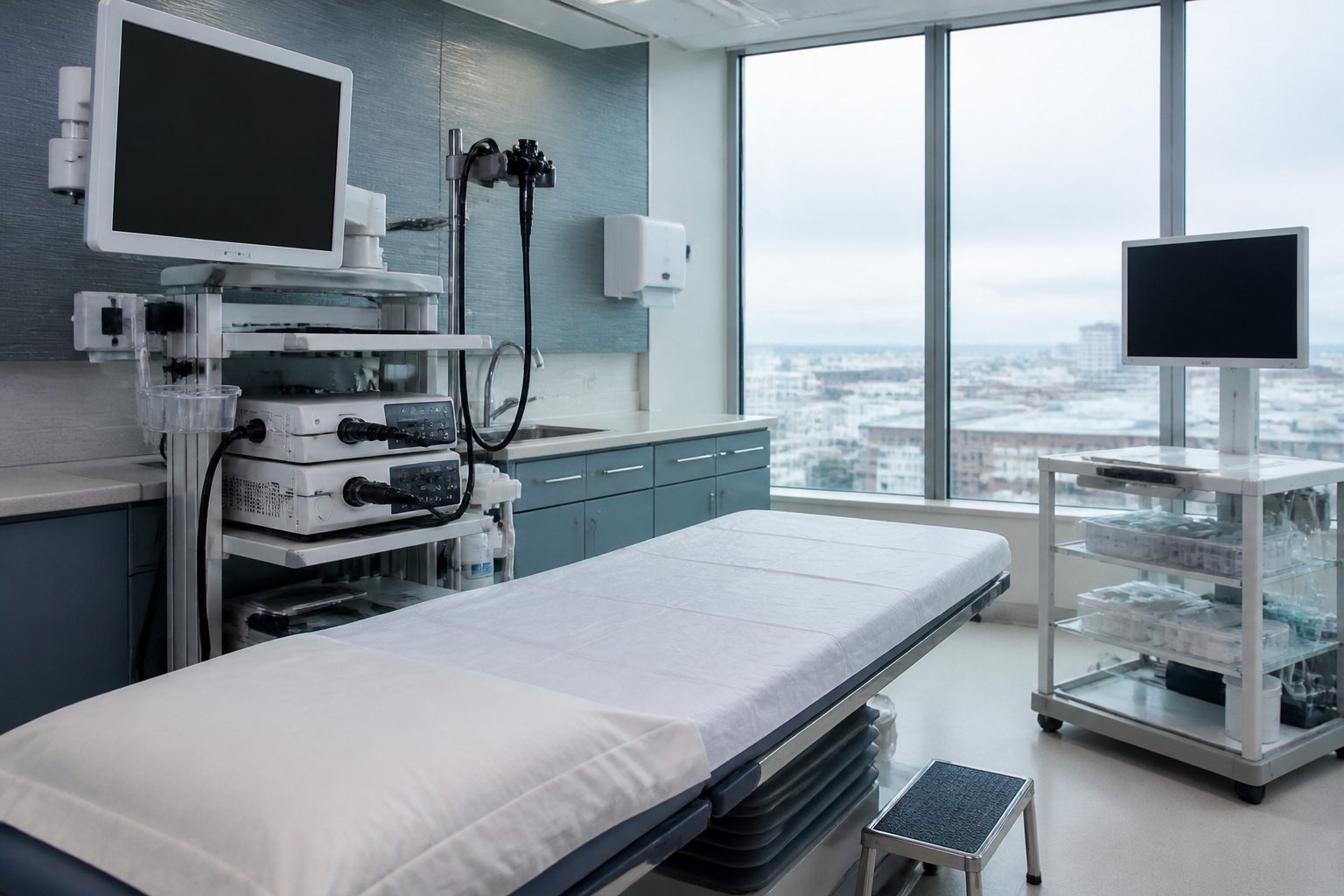
Patients needing a gastroscopy (upper endoscopy) in India can expect to pay $80-$250 (₹6,500-20,000), while in Malaysia, the cost typically ranges from $220-$450 (RM1,000-2,000). These are for routine, non-emergency procedures done at private hospitals and clinics, before any additional tests or treatments.
This guide is for people considering digestive and liver care, especially those comparing India and Malaysia for endoscopy, colonoscopy, or related diagnostic procedures. We cover what is included in the price, extra charges to watch for, how to compare hospitals, and practical planning advice.
What a gastroscopy involves
Gastroscopy is a procedure where a thin, flexible tube with a camera (endoscope) is inserted through the mouth to examine the esophagus, stomach, and first part of the small intestine. It is used to diagnose ulcers, gastritis, reflux, bleeding, and unexplained digestive symptoms. The test is usually done as a day procedure, with or without sedation, and takes 10-20 minutes. Recovery is quick, and most patients go home within a few hours.
In both India and Malaysia, gastroscopy is performed in modern endoscopy suites by gastroenterologists or general surgeons. Private hospitals and major clinics offer the procedure, and many cater to international patients with English-speaking staff and streamlined booking processes.
Typical costs in India and Malaysia
The cost of a routine gastroscopy varies by city, hospital, and whether sedation or additional tests are needed. In India, major cities like Delhi, Mumbai, Chennai, and Bangalore may charge slightly more than smaller cities, but even top hospitals are often less expensive than in most other countries. In Malaysia, Kuala Lumpur and Penang are popular for medical travellers, with prices higher than in public hospitals but affordable compared to the West.
Below is a comparison of typical gastroscopy costs in India, Malaysia, and selected other countries for context. Prices are for a standard outpatient procedure, not including extra tests, biopsies, or treatment of findings.
| Country | Typical cost (USD) | Local currency | Includes sedation? |
|---|---|---|---|
| India | $80-$250 | ₹6,500-20,000 | Sometimes |
| Malaysia | $220-$450 | RM1,000-2,000 | Usually |
| Thailand | $300-$600 | ฿10,500-21,000 | Usually |
| Singapore | $700-$1,200 | SGD950-1,600 | Yes |
| Philippines | $150-$400 | ₱8,500-22,500 | Sometimes |
| United States | $1,200-$3,000 | — | Yes |
| UK (private) | $1,000-$2,000 | £800-1,600 | Yes |
| UAE | $900-$1,600 | AED3,300-5,900 | Yes |
What is included in the price
In both India and Malaysia, a quoted price for gastroscopy usually covers the doctor’s fee, use of the endoscopy suite, basic nursing care, and standard disposables. Sedation (conscious or deep) may or may not be included—this is one of the biggest variables. Some hospitals offer packages for international patients that include pre-procedure consultation, basic blood tests, and a follow-up report. Always check what is covered before booking.
Additional costs may arise if:
- Biopsies or polyp removal are done during the procedure
- Special stains or advanced imaging (e.g. NBI, chromoendoscopy) are used
- You require general anaesthesia (rare for adults)
- There are findings that need immediate treatment (e.g. bleeding control, variceal banding)
- Extra medications, IV fluids, or extended recovery time are needed
Hidden costs and common extras
When budgeting for a gastroscopy, it’s important to account for extra charges that are frequently not included in the advertised procedure price. These hidden costs can add up quickly and may significantly affect your final bill. In both India and Malaysia, the base price of a gastroscopy often covers only the endoscopic procedure itself, but you may be billed separately for several necessary services and optional extras.
- Pre-procedure consultation: Sometimes included in the package, but often billed separately at $15-$40. This initial assessment is needed to review your symptoms, medical history, and determine the best approach.
- Pre-op blood tests or ECG: Routine safety checks such as blood work or an electrocardiogram can cost $10-$30. These are usually required, especially for older adults or those with chronic conditions.
- Biopsy histopathology: If a biopsy is taken during the gastroscopy, expect to pay $30-$70 per sample in India and $40-$100 in Malaysia for laboratory analysis. Multiple samples increase the total fee.
- Polyp removal: Should a polyp be found and removed during the procedure, this can cost an additional $40-$120 depending on its size and complexity.
- Post-procedure medications or special diet: Prescription medicines for pain, infection prevention, or digestive support are often extra, as are any special dietary requirements after the procedure.
- Repeat consultation to discuss results: A follow-up appointment to review biopsy or procedure findings may be billed separately unless included in a package.
- Hospital registration or administration fees: Some hospitals charge a one-time registration or admin fee, which can range from a few dollars to $20 or more.
To avoid surprises, always request a written breakdown of all potential costs before confirming your appointment. This is especially important for international patients, as some hospitals offer all-inclusive ‘medical tourism’ packages that claim to cover everything from airport pickup to follow-up care. Even with such packages, clarify exactly what is included and ask for details in writing. If you require additional procedures, tests, or longer hospital stays, these will likely incur extra charges. Being proactive about understanding the full scope of costs will help you budget accurately and avoid financial stress during your treatment journey.
How to save safely on gastroscopy
It is possible to reduce the cost of gastroscopy without compromising on safety or quality. The key is to make informed choices about where you receive care, what services you need, and how you approach the process. Here are practical, safe strategies for saving money on gastroscopy in India and Malaysia:
- Ask for a package price: Many hospitals offer bundled packages that include the consultation, sedation, and standard pre-procedure tests. This can be more economical than paying for each element separately and helps you avoid unexpected add-ons.
- Consider reputable hospitals in non-metro cities: Hospitals in cities like Coimbatore (India), Penang (Malaysia), or other regional centers often offer lower prices for the same quality of care found in bigger cities. These hospitals may also have shorter waiting times and more personalized service.
- Choose appropriate sedation: If you do not require general anaesthesia, request that only local anaesthetic or mild sedation is used and billed. This not only lowers the cost but also reduces recovery time and risks associated with deeper sedation.
- Bring previous test results: To avoid unnecessary repeat investigations, provide your doctor with any relevant recent blood tests, imaging, or medical reports. This can save both time and money.
- Clarify follow-up consultation inclusion: Ask if the price includes a follow-up appointment to discuss biopsy or procedure results. If not, negotiate to have this included or budget for it separately.
Always avoid unknown or unaccredited clinics that advertise very low prices without clear details or proof of hygiene and safety standards. Saving money is important, but not at the expense of your health. Prioritize established hospitals or clinics with good reputations, transparent pricing, and proper accreditation. By taking these steps, you can access affordable, high-quality gastroscopy while minimizing unnecessary expenses and risks.
Choosing the right hospital for digestive and liver care
Selecting the right hospital for gastroscopy or other digestive and liver procedures is crucial for safety, quality, and overall experience. In India, major cities such as Delhi, Mumbai, Chennai, Bangalore, Hyderabad, and Kolkata are home to private hospitals with advanced endoscopy units and internationally trained specialists. These hospitals often have dedicated gastroenterology or hepatology departments, state-of-the-art equipment, and robust infection control protocols. In Malaysia, Kuala Lumpur, Penang, and Johor Bahru are leading destinations for medical travellers, offering modern hospitals with English-speaking staff and a reputation for patient-friendly services.
Key factors to consider:
- Accreditation: Look for hospitals accredited by recognized bodies such as Joint Commission International (JCI), National Accreditation Board for Hospitals & Healthcare Providers (NABH) in India, or Malaysian Society for Quality in Health (MSQH). Accreditation ensures adherence to international safety and quality standards.
- Volume of procedures performed: High-volume hospitals or clinics tend to have more experienced doctors and staff, which can translate to better outcomes and lower complication rates.
- Dedicated international patient office: Many top hospitals have teams that assist with visa support, airport transfers, translation, and personalized care coordination, making the process smoother for foreign patients.
- Clear cost estimates in advance: Choose hospitals that provide transparent, itemized quotes and are willing to answer questions about what is and isn’t included in the cost.
- English-speaking staff and doctors: Especially important for international patients, ensuring clear communication about your diagnosis, treatment options, and aftercare instructions.
If your needs extend beyond a simple gastroscopy—such as complex liver, kidney, or urology procedures—opt for a multi-specialty hospital with comprehensive backup in case of complications. However, for routine gastroscopy, reputable mid-sized hospitals or specialist clinics can deliver high-quality care at more affordable rates. Always check online reviews, ask for patient testimonials, and verify the credentials of your chosen facility before making a decision. This due diligence will help ensure a safe, comfortable, and cost-effective treatment experience.
Other digestive and liver procedures: indicative costs
Many patients undergoing a gastroscopy also need other digestive or liver-related procedures, either for comprehensive diagnosis or as part of a treatment plan. Combining procedures like colonoscopy, gallstone removal (ERCP), or kidney stone removal (PCNL) can offer convenience and sometimes cost savings, especially when bundled as part of a package. Below are typical private hospital price ranges in India and Malaysia for these related procedures, but remember that actual costs may vary based on hospital tier, city, and the complexity of your case.
- Colonoscopy: In India, expect to pay between $140 and $350 (₹11,000-29,000), while in Malaysia, the cost ranges from $380 to $700 (RM1,700-3,000). Factors influencing price include whether sedation is used and if polyp removal is required.
- Gallstone removal (ERCP): This advanced endoscopic procedure costs $700-$1,600 in India and $1,400-$2,800 in Malaysia. The need for stent placement or advanced imaging can increase the price.
- Kidney stone removal (PCNL): Costs range from $1,000-$2,500 in India and $2,000-$4,000 in Malaysia. Hospital stay duration and stone complexity are key cost factors.
- Hernia repair (open): Open surgery for hernia repair is $900-$1,800 in India and $1,500-$3,000 in Malaysia. Mesh type and anaesthesia impact pricing.
- BPH (prostate) treatment: Treating benign prostatic hyperplasia costs $1,500-$3,000 in India and $2,200-$4,000 in Malaysia. Laser techniques or longer stays may increase costs.
- Liver disease workup (labs + imaging): A basic workup costs $70-$250 in India and $130-$400 in Malaysia, depending on the number of tests and whether advanced imaging (like MRI or FibroScan) is included.
Prices can be higher at top-tier hospitals, especially those accredited by international bodies or in major city centers. Advanced minimally invasive techniques, robotic surgery, or personalized care packages will also add to the total cost. When considering these procedures, always ask for a comprehensive quote, inquire about possible package deals, and clarify which services (e.g., anaesthesia, hospital stay, follow-up) are included. This approach helps you make informed decisions and manage your healthcare budget effectively.
Planning your trip: logistics and timeline
For international patients, most hospitals require you to fast for 6-8 hours before gastroscopy and arrive at least an hour before your scheduled time. The procedure itself takes 10-20 minutes, with a 1-2 hour recovery if sedation is used. You can usually fly home the same or next day, but it is best to stay overnight locally if possible, especially if biopsies are taken.
Bring all previous medical records, a list of medications, and your passport/visa documents. Arrange for an escort if you will be sedated. Many hospitals offer airport pickup, hotel booking assistance, and translation services for a fee or as part of a package.
The bottom line
Gastroscopy in both India and Malaysia is recognized for being generally safe, affordable, and accessible at modern, well-equipped hospitals. India tends to offer the lowest prices for gastroscopy, with costs often starting as low as $60-$120 (₹5,000-10,000) at private hospitals. Malaysia’s prices are higher, typically ranging from $250-$500 (RM1,100-2,200), but the country is renowned for its streamlined medical tourism infrastructure, English-speaking healthcare professionals, and efficient patient services. This makes Malaysia especially appealing to international patients who value ease of communication and a concierge-like experience.
The total cost of a gastroscopy in either country depends on several factors. Key cost drivers include the reputation and location of the hospital (with major metro cities and top private hospitals charging more), the type of sedation used (local anaesthetic, conscious sedation, or general anaesthesia), and whether additional procedures such as biopsies or polyp removal are needed. Costs can also increase if advanced imaging or specialist consultations are required.
To avoid unexpected expenses, always request a detailed, written quote before booking your procedure. Clarify what is included in the quoted price—such as consultation fees, sedation, pre-procedure tests, and post-procedure follow-up. If you are travelling from abroad, ask about medical tourism packages, which may bundle hospital charges, airport transfers, and even accommodation. Understanding exactly what is covered will help you budget accurately and prevent surprises on your final bill. Ultimately, both India and Malaysia provide high standards of care for gastroscopy, but your choice may depend on your language preferences, support needs, and comfort with navigating the healthcare system.
Frequently asked questions
Is sedation necessary for gastroscopy?
Sedation is not strictly necessary for everyone, but it helps most patients tolerate the procedure comfortably. In India, some hospitals perform it without sedation or with only local anaesthetic; in Malaysia, mild sedation is standard. Discuss your preference with the doctor in advance.
How soon will I get my results?
Most hospitals provide a preliminary report immediately after the procedure. If biopsies are taken, the pathology results typically take 3-7 days. Some hospitals offer email or telemedicine follow-up for international patients to discuss results.
Can I combine gastroscopy with other procedures?
Yes, many patients have colonoscopy or other endoscopic tests done at the same time. This can be more cost-effective and convenient, but must be arranged in advance. Additional costs will apply for each procedure.
Are there risks with low-cost clinics?
Lower prices can mean fewer amenities or less-experienced staff. Always check the clinic’s credentials, infection control measures, and whether the doctor is a qualified gastroenterologist. Avoid clinics that cannot provide clear written information or cost estimates.
What documents do I need as an international patient?
Bring your passport, visa, previous medical records, test results, and a list of current medications. Some hospitals may require a referral letter or a brief medical summary from your home doctor. Check hospital requirements before travelling.
Related guides
Disclaimer: Prices and inclusions are indicative and vary by hospital, city, and individual case. Always get a written quote and consult a qualified doctor before making any medical decisions or travel arrangements.