
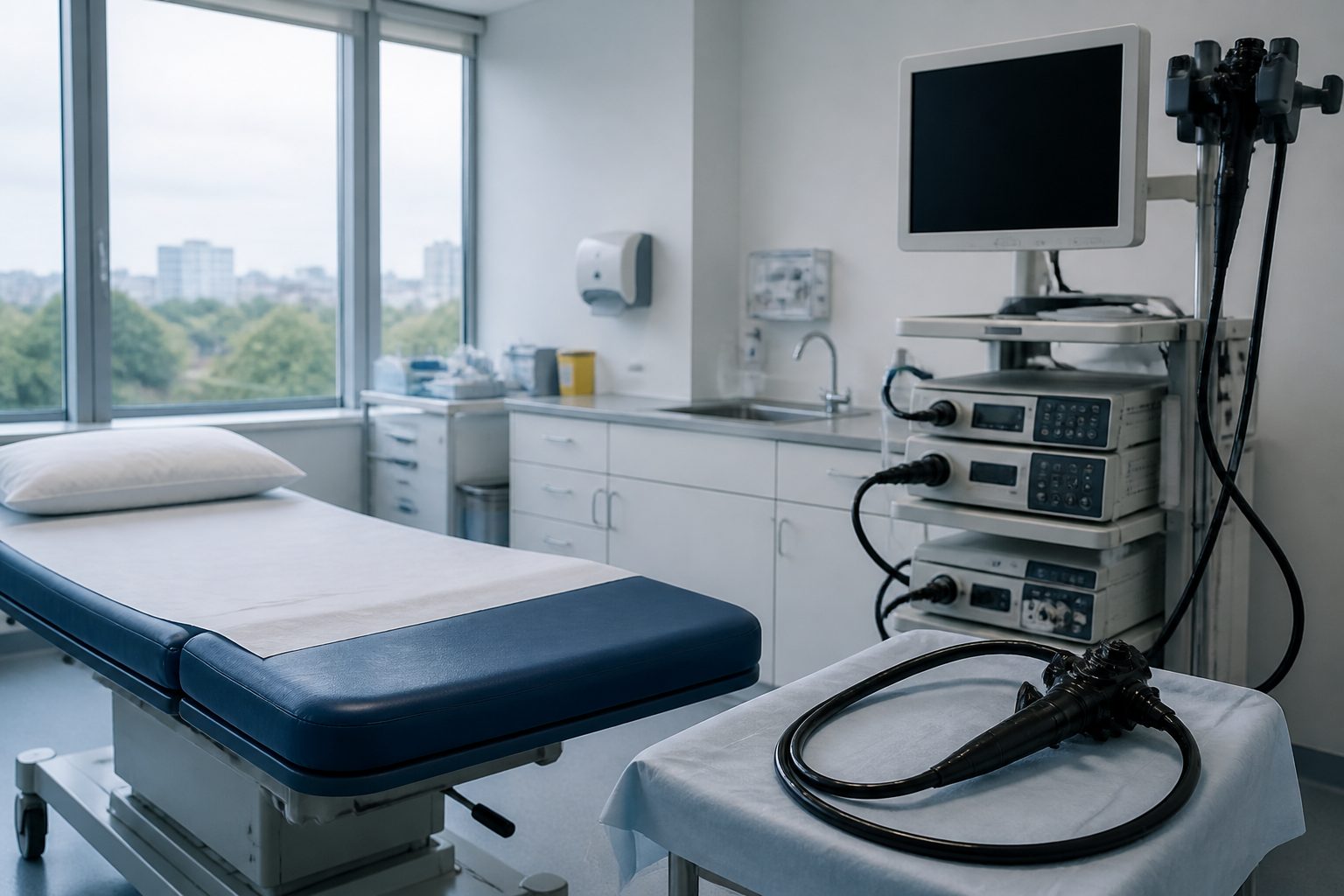
Colonoscopy and sigmoidoscopy are two common procedures used to examine the large intestine for digestive conditions. Patients and families considering these tests often want to know the differences, what each is used for, and how much they cost in different countries.
This guide is for anyone comparing colonoscopy and sigmoidoscopy for diagnosis or follow-up of digestive symptoms, or for routine screening. We summarise the main differences, typical costs in major countries, and what to expect as an international or local patient.
Colonoscopy vs sigmoidoscopy: Key differences
Both colonoscopy and sigmoidoscopy are endoscopic procedures that allow doctors to view the inside of the colon (large intestine). However, they differ in scope, preparation, duration, and cost. Understanding these differences can help patients and families make informed decisions about which test is appropriate for their situation.
Colonoscopy examines the entire colon, from the rectum to the cecum. It is used for both diagnosis and screening of a wide range of conditions, including polyps, inflammatory bowel disease, and unexplained symptoms. Sigmoidoscopy examines only the lower part of the colon (the rectum and sigmoid colon). It is often used for targeted investigations or follow-up, especially when symptoms are limited to the lower bowel.
The table below provides an overview of the key differences between the two procedures:
| Feature | Colonoscopy | Sigmoidoscopy |
|---|---|---|
| Area examined | Whole colon (rectum to cecum) | Lower colon (rectum & sigmoid) |
| Typical duration | 20–45 minutes | 10–20 minutes |
| Sedation | Usually required | Not always needed |
| Preparation | Full bowel prep | Limited prep/enema |
| Removal of polyps | Yes | Yes (in examined area) |
| Screening for cancer | Yes (whole colon) | Yes (only lower colon) |
| Cost | Higher | Lower |
What each procedure is used for
Colonoscopy is the gold standard for investigating unexplained digestive symptoms, rectal bleeding, changes in bowel habits, or iron deficiency anemia. It is also recommended for colon cancer screening in average-risk adults, usually starting at age 45–50. Colonoscopy allows for biopsy and removal of polyps throughout the colon, which can prevent cancer development.
Sigmoidoscopy is typically used for patients with symptoms limited to the lower bowel, such as rectal bleeding or persistent diarrhea. It is also sometimes used for follow-up after treatment for conditions like ulcerative colitis, or as a screening tool when full colonoscopy is not available or not needed. Because it is less invasive and requires less preparation, sigmoidoscopy can be a practical first step in certain cases.
Colonoscopy and sigmoidoscopy costs: Country comparison
The costs for colonoscopy and sigmoidoscopy can differ dramatically depending on where you receive the procedure, the type of healthcare system in place, and what specific services are included in the quoted price. In the United States, for example, a self-paying patient may be charged anywhere from $1,000 to over $4,000 for a colonoscopy at a private hospital, with additional fees for sedation, pathology, and any therapeutic interventions such as polyp removal. Sigmoidoscopy is generally less expensive, typically ranging from $300 to $1,000, but costs can still add up if biopsies or sedation are required.
In Western Europe, such as the UK or Germany, costs for private colonoscopy are usually between $800 and $2,000, while sigmoidoscopy may cost $250 to $700. In public hospitals, costs may be lower or even covered by national insurance, but wait times can be longer and eligibility criteria stricter. Australia and Canada have similar public/private divides, with private procedures costing upwards of $1,200 for colonoscopy and $400 for sigmoidoscopy, while public systems may cover the cost for eligible patients, though with potential waiting lists.
Medical tourism destinations like India, Thailand, and Turkey offer significantly reduced prices: colonoscopy may cost $300 to $800 and sigmoidoscopy $100 to $300, often including consultation and basic pathology. However, prices can vary based on the hospital’s reputation, location, and whether international patient services are offered. Always verify if the quoted price includes all necessary elements—consultation, sedation, pathology, and follow-up—since additional fees can quickly accumulate.
Ultimately, the total cost is influenced by several factors: whether the procedure is diagnostic or therapeutic, the need for sedation, the number of biopsies or polyps removed, hospital accreditation, and local economic conditions. Patients should always request a detailed, itemized estimate before committing to a facility or traveling abroad for care.
What is included in the price?
When comparing prices for colonoscopy or sigmoidoscopy, it’s crucial to understand exactly what is included in the quoted fee, as unexpected costs can arise. Typically, the base price covers the procedure itself, but there are several additional services that may be billed separately depending on the hospital or clinic and the country’s billing practices.
- Initial specialist consultation: Often required before the procedure to review your medical history and determine appropriateness. This may be included in package deals or billed separately ($50–$250).
- Pre-procedure blood tests: These may be needed to assess your fitness for sedation or anesthesia and can add $20–$100 to the bill.
- Bowel preparation solution: Essential for both procedures, sometimes provided by the hospital or prescribed for purchase at a pharmacy ($10–$50).
- Sedation or anesthesia: Particularly important for colonoscopy, this can be a significant extra cost ($100–$500), especially in Western countries. Sigmoidoscopy may be performed without sedation, reducing costs.
- Biopsy or polyp removal: If abnormal tissue is found, removal or sampling may be necessary and is often not included in the base price. Fees can range from $50 to $400 or more, depending on the number of samples and country.
- Pathology analysis: Any tissue samples are sent for laboratory analysis, which incurs its own charge ($50–$200 per sample).
- Post-procedure recovery and report: Some clinics include brief recovery time and a written report in the main fee, while others may bill separately for extended monitoring or follow-up consultations.
To avoid surprises, always ask for a comprehensive, itemized quote. Inquire specifically about the costs of sedation, biopsy, pathology, and any follow-up visits. In some countries, public hospitals may bundle most of these services, while private or international clinics are more likely to itemize each element. Understanding what’s included helps you budget accurately and compare options fairly.
How to save safely on colonoscopy or sigmoidoscopy
For patients paying out-of-pocket or seeking care internationally, there are several ways to reduce the cost of a colonoscopy or sigmoidoscopy without compromising safety or quality. Start by researching and comparing prices at multiple hospitals or clinics—preferably those with recognized national or international accreditation, such as JCI (Joint Commission International), NABH (National Accreditation Board for Hospitals), or equivalent local bodies. Accredited facilities are more likely to maintain high standards of safety, hygiene, and staff qualifications.
- Compare procedure packages: Ask for all-inclusive quotes that cover consultation, sedation, pathology, and follow-up, so you can accurately compare total costs.
- Opt for outpatient procedures: Scheduling your procedure as a day case (no overnight stay) can significantly reduce facility fees.
- Discuss sedation options: For sigmoidoscopy, sedation may be optional. If you are comfortable without it, you can save on anesthesia costs and recovery time.
- Clarify what’s included: Always request a detailed breakdown of what is and isn’t covered in the quoted price, especially regarding polyp removal and pathology fees.
- Consider medical travel: In countries like India, Thailand, or Turkey, procedure costs can be up to 80% lower than in the US or Western Europe. However, ensure the facility is reputable and has experience with international patients.
Never compromise on the credentials of the facility or the experience of the endoscopist. Ask about infection control protocols, equipment sterilization, and the provider’s track record with international or self-paying patients. If traveling, research the country’s healthcare regulations and whether your home country’s insurance will reimburse any part of the cost. By carefully weighing these factors, you can make an informed decision that balances safety, quality, and affordability.
Risks and recovery: What to expect
Both procedures are generally safe when performed by experienced specialists. The main risks include bleeding (especially if a polyp is removed), perforation of the colon, and reactions to sedation. The overall risk is low, but slightly higher with colonoscopy due to the full examination and use of sedation.
Most patients can return home the same day. After colonoscopy with sedation, it is necessary to arrange for someone to escort you home and avoid driving or signing documents for 24 hours. Mild bloating, cramping, or gas are common and usually resolve within hours. You should receive a written report and, if samples were taken, pathology results within a few days.
How to choose between colonoscopy and sigmoidoscopy
Deciding whether you need a colonoscopy or a sigmoidoscopy depends on several personal and medical factors. Colonoscopy examines the entire colon and is generally recommended for comprehensive screening, especially if you are over 50, have a family history of colorectal cancer, or present with unexplained symptoms such as rectal bleeding, persistent abdominal pain, or unexplained anemia. It is also preferred if previous tests have found polyps or if there is a need to investigate the entire colon for inflammatory bowel disease or other conditions. Colonoscopy is more expensive but provides a complete view and allows for removal of polyps or biopsy of suspicious areas throughout the colon.
Sigmoidoscopy, on the other hand, examines only the lower part of the colon (rectum and sigmoid colon) and may be sufficient for younger patients with localized symptoms such as rectal bleeding or for follow-up of known lower bowel conditions like ulcerative colitis. It is less invasive, usually quicker, and can often be performed without sedation, making it a more affordable and lower-risk option for selected patients. However, it does not detect problems in the upper colon, so it may miss some polyps or cancers.
Always discuss your symptoms, family history, and reasons for the procedure with a qualified gastroenterologist. If you are considering traveling for the procedure, provide your full medical history in advance and ask if local screening guidelines differ from those in your home country. Insurance coverage is another important consideration—some plans cover screening colonoscopy but not sigmoidoscopy, or vice versa, especially if the test is considered preventive. Check your policy details to avoid unexpected costs. By weighing your medical needs, risk factors, and financial situation, you and your doctor can choose the most appropriate and cost-effective test.
Practical tips for international and local patients
Whether you are traveling abroad for a colonoscopy or sigmoidoscopy or arranging one locally, planning ahead can make the experience smoother and more cost-effective. International patients should allow a minimum of 2–3 days in the destination city: one for pre-procedure consultation and tests, one for the procedure itself, and at least one for recovery and follow-up. Many hospitals require bowel preparation to begin the day before, so coordinate your travel to allow time for this. Choose accommodation close to the hospital, and verify if language support or translation services are available, especially if you do not speak the local language fluently. Bring copies of your medical records, a list of current medications, and any previous test results to help the medical team tailor your care.
For local patients, it’s important to book your appointment well in advance, as wait times can vary greatly, especially in public hospitals. Ask whether you need a referral from a general practitioner or another specialist, as this can be a requirement in many countries. In public systems, procedures are often covered or heavily subsidized, but you may face longer waitlists and less flexibility in scheduling. Private hospitals usually offer shorter wait times, more comfortable facilities, and additional services, but at a higher cost. Clarify all costs upfront and check whether your insurance policy covers the specific procedure, especially if it is for screening rather than diagnostic purposes.
Regardless of your location, follow all pre-procedure instructions carefully, including fasting, medication adjustments, and bowel preparation. Arrange for someone to accompany you home if you receive sedation. By preparing in advance and communicating clearly with your healthcare provider, you can reduce stress, avoid unexpected expenses, and ensure a safer procedure.
Frequently asked questions
Is colonoscopy painful?
Most patients receive sedation or anesthesia during colonoscopy, so pain is minimal. You may feel bloating or pressure, but the procedure itself is usually well tolerated. Some mild discomfort may occur afterward, but it resolves quickly.
Do I need to stop eating before the procedure?
Yes. For colonoscopy, you will need to follow a clear liquid diet and take a bowel preparation solution the day before. For sigmoidoscopy, preparation may be less intense, but some fasting or enemas are still required. Your provider will give detailed instructions.
How soon will I get my results?
The doctor can usually share initial findings immediately after the procedure. If biopsies or polyps are taken, final pathology results are often ready within 2–7 days, depending on the hospital and country.
Can polyps be removed during sigmoidoscopy?
Yes, polyps found in the lower colon during sigmoidoscopy can usually be removed during the procedure. However, if polyps are found higher up, a full colonoscopy may be required to remove them safely.
How often should I have these procedures?
Screening colonoscopy is generally recommended every 10 years starting at age 45–50 for average-risk adults. Sigmoidoscopy may be recommended every 5 years or as needed for follow-up. Your schedule will depend on personal risk factors and your doctor’s advice.
Related guides
Disclaimer: Prices in this guide are indicative and can vary by hospital, doctor, and individual case. Always request a written quote and consult a qualified gastroenterologist before making decisions about your care.